



Why Armoured Control Cables Are Essential for Industrial Safety?
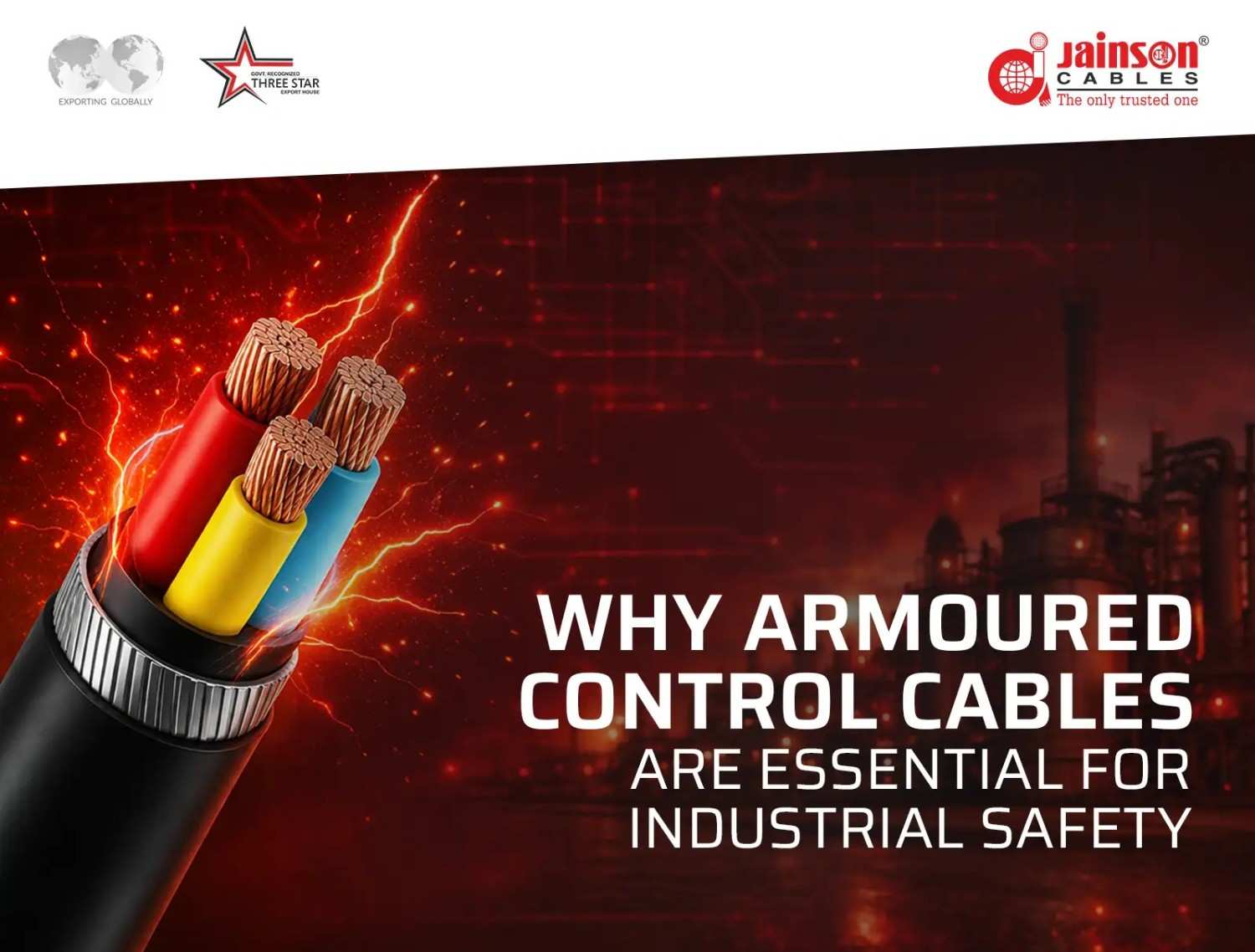
Industrial environments demand reliable control systems. From automated production lines and heavy machinery to power distribution panels and process plants, control circuits ensure that equipment operates safely and efficiently. At the center of these systems are armoured control cables, designed to protect critical electrical signals in challenging conditions.
Unlike standard cables, an armoured cable for industrial use incorporates a protective metallic layer that shields conductors from mechanical damage, external impact, and environmental stress. In industries where cable failure can lead to downtime, equipment malfunction, or safety hazards, this additional protection becomes essential rather than optional.
Protection Against Mechanical Damage
Industrial sites expose cables to physical risks daily. Cables may be routed through cable trays, underground ducts, or directly along factory floors. They are often subjected to:
- Accidental impact from tools or machinery
- Compression under the equipment
- Abrasion against metal edges or structural components
Armoured control cables include a steel wire or steel strip armour layer that absorbs mechanical stress and prevents damage to the inner conductors. This structural reinforcement significantly reduces the risk of conductor breakage or insulation failure caused by external force.
In heavy-duty manufacturing plants, mining operations, and construction sites, this level of protection is critical for maintaining operational continuity.
Electrical Integrity and Signal Reliability
Control cables are responsible for transmitting low-voltage signals between control panels, sensors, and equipment. Any interruption or distortion in these signals can affect machine coordination, safety systems, or process automation.
By protecting the cable core from physical stress, heavy-duty control cables help preserve conductor geometry and insulation integrity. This ensures stable signal transmission and reduces the risk of intermittent faults—often the most difficult type of electrical issue to diagnose.
In environments with vibration or movement, the armour layer also provides structural stability, minimizing internal conductor fatigue over time.
Fire and Environmental Safety Considerations
Industrial facilities must comply with strict safety standards, particularly in sectors such as oil & gas, power generation, and chemical processing. Cables routed in exposed areas must be resistant to external damage that could trigger short circuits or sparks.
An armoured cable for industrial useadds a physical barrier between the conductors and external hazards. When combined with appropriate insulation materials, it contributes to improved fire resistance and containment in case of electrical faults.
Additionally, armour enhances durability in environments exposed to moisture, dust, or fluctuating temperatures, common conditions in industrial settings.
Long-Term Cost Efficiency Through Durability
While armoured control cables may involve a higher initial investment compared to unarmoured variants, their durability reduces replacement frequency and maintenance intervention. In industries where downtime directly impacts productivity, preventing cable failure is more cost-effective than repeated repairs.
The added mechanical protection extends cable lifespan, particularly in high-risk installations such as underground routing, outdoor facilities, or areas with heavy equipment movement.
JainsonCables’ Approach to Armoured Control Cables
JainsonCables manufactures armoured control cables through controlled in-house processes that manage conductor quality, insulation application, and armour integration. The armour is designed to provide mechanical strength without compromising flexibility or installation ease.
Their heavy-duty control cablesare engineered for industrial environments where mechanical stress and operational safety are primary concerns. Each cable undergoes electrical and mechanical validation to ensure consistent performance under load and environmental exposure.
Conclusion
Armoured control cables play a crucial role in safeguarding industrial control systems. By providing mechanical protection, preserving signal integrity, and enhancing environmental resilience, they support safer and more reliable industrial operations.
For facilities where safety, durability, and operational continuity are critical, properly engineered armoured control cables such as those manufactured by Jainson Cables form an essential part of industrial electrical infrastructure.