



The Role of Automotive Cables in Ensuring Smooth and Safe Vehicle Performance
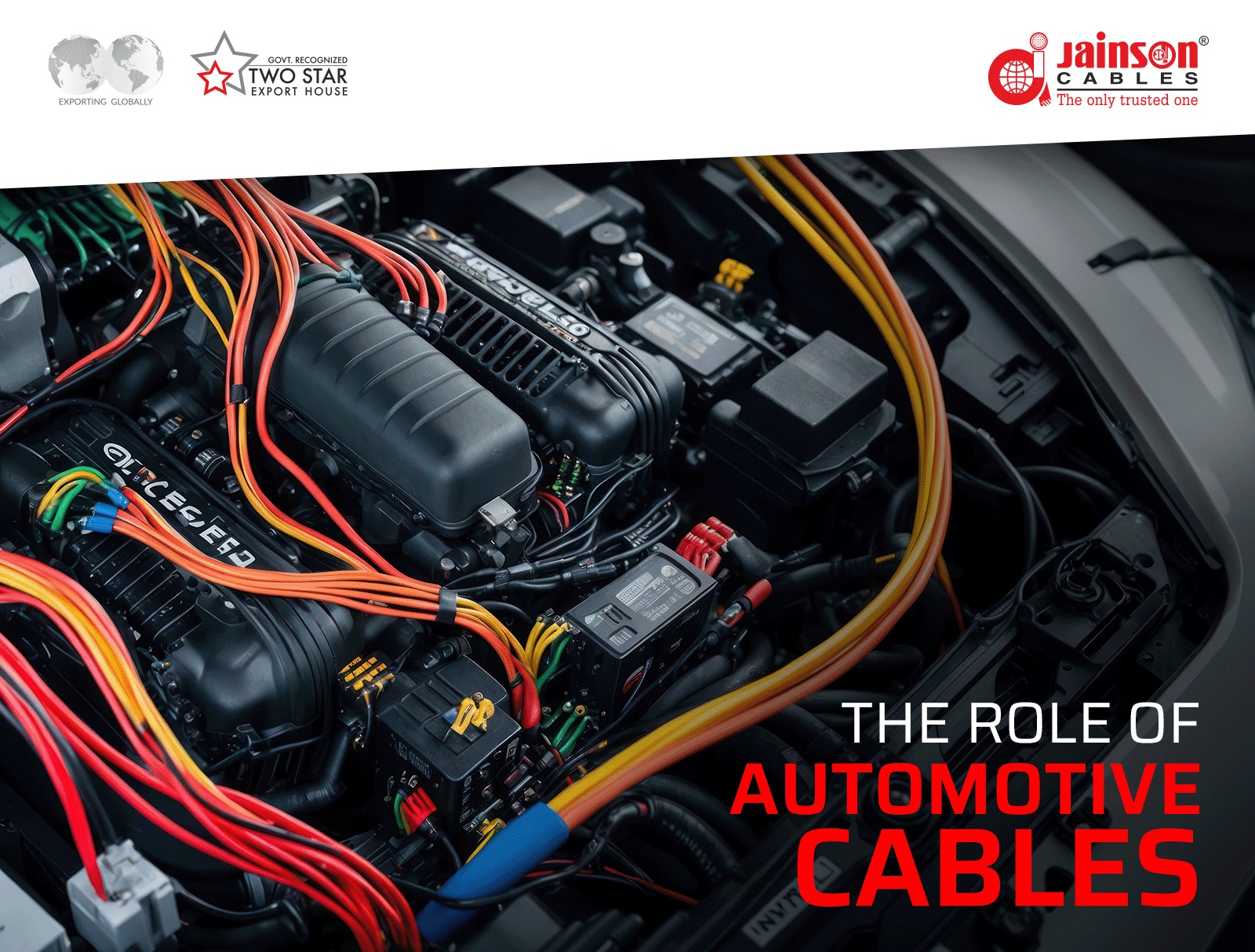
Modern vehicles rely heavily on electrical systems. From engine management and lighting to infotainment and safety mechanisms, electrical connectivity determines how efficiently and safely a vehicle operates. At the core of this network are automotive cable components that must function reliably under heat, vibration, and continuous electrical load.
The performance of a vehicle’s electrical architecture depends not only on system design but also on the quality of its vehicle electrical cables. These cables carry power, transmit signals, and ensure stable communication between electronic control units (ECUs), sensors, and actuators. When engineered correctly, they contribute directly to smooth vehicle operation and long-term reliability.
Automotive Cables: the Backbone of Vehicle Electrical Systems
In today’s vehicles, electrical systems are increasingly complex. Advanced driver assistance systems (ADAS), electric power steering, fuel injection control, and battery management systems all rely on precise electrical transmission.
Automotive cable must therefore deliver:
- Consistent current flow without excessive voltage drop
- Signal stability for data communication systems
- Resistance to electromagnetic interference
- Mechanical durability under continuous vibration
Automotive cables operate in constant motion, temperature changes, and exposure to fluids such as engine oil or coolant. This makes material selection and conductor design critical to performance.
Heat Resistance and Thermal Stability
One of the most demanding aspects of automotive applications is temperature exposure. Under-hood environments can reach high temperatures, particularly near engines, exhaust systems, and battery compartments.
Heat-resistant automotive cables are designed with insulation compounds capable of maintaining dielectric strength and flexibility under elevated temperatures. If insulation hardens or cracks, it can lead to short circuits, fire accidents, system malfunctioning, signal loss, or electrical faults.
Thermal stability ensures that:
- Conductor resistance remains stable
- Insulation integrity is preserved
- Cable flexibility is maintained over time
In electric vehicles (EVs) and hybrid platforms, thermal management becomes even more important due to high-voltage systems and battery operation.
Mechanical Durability and Vibration Resistance
Vehicles are dynamic systems. Continuous vibration, component movement, and varying road conditions impose mechanical stress on cables.
High-quality automotive cables must resist:
- Conductor fatigue from repeated flexing
- Insulation wear from contact with adjacent components
- Stress concentration near connectors and harness junctions
Fine-stranded conductors are typically used to enhance flexibility and reduce the risk of strand breakage. Proper insulation thickness and jacket formulation further improve long-term durability.
Failure in automotive cable systems can lead to intermittent faults—often difficult to diagnose and costly to repair. This makes mechanical integrity a key factor in automotive cable safety.
Electrical Stability and Safety Considerations
Electrical safety in vehicles is closely tied to cable performance. Poorly engineered cables can result in overheating, voltage fluctuations, or signal interference. These issues may affect critical systems such as braking, lighting, or engine control.
Effective automotive cable safety involves:
- Correct conductor sizing to handle rated current loads
- Insulation materials with high dielectric strength
- Resistance to flame propagation in case of an electrical fault
- Secure termination compatibility to minimize contact resistance
In high-voltage vehicles, cable insulation must also meet stricter performance criteria to prevent leakage or arcing.
The Shift Toward Advanced Electrical Architectures
As vehicles incorporate more electronics and move toward electrification, the demand for reliable vehicle electrical cables continues to increase. Modern wiring harnesses must accommodate:
- Higher data transmission requirements
- Increased power distribution needs
- Compact routing within a limited space
This requires automotive wire and cable solutions that balance conductivity, flexibility, and thermal resistance without adding unnecessary bulk.
Jainson Cables’ Approach to Automotive Cable Manufacturing
Jainson Cables manufactures automotive cables through controlled in-house processes that manage conductor quality, insulation formulation, and extrusion precision. By maintaining tight control over copper processing and insulation parameters, the company ensures consistent electrical performance across production batches.
Their range of automotive cables includes heat-resistant variants engineered for under-hood applications and high-flexibility constructions suited for harness assemblies. Each cable undergoes electrical and mechanical validation to ensure performance under vibration, temperature variation, and continuous load.
Rather than offering generic cable solutions, JainsonCables aligns its automotive wire and cable designs with real vehicle operating conditions, ensuring predictable behavior in complex electrical systems.
Conclusion
Automotive cables play a foundational role in ensuring smooth and safe vehicle performance. From power distribution and signal transmission to thermal endurance and vibration resistance, their design directly impacts system reliability.
As vehicles become more electrically advanced, the importance of properly engineered automotive cables continues to grow. Through controlled manufacturing processes and application-focused design, Jainson Cables delivers automotive cable solutions that support stable electrical performance, long-term durability, and enhanced vehicle safety.